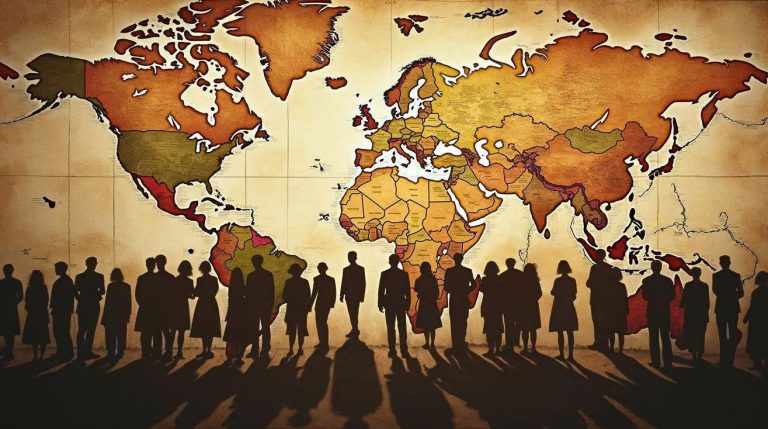
How Empire and Decolonisation Shaped Contemporary Electoral Strategy
There’s a uniquely compelling aspect of exploring how empire and decolonization molded today’s political landscapes, and it often feels like piecing together an intricate tapestry. Did you ever stop to wonder how historical forces continue to shape the present? In a world that thrives on progress and change, the remnants of past interactions play a significant role in defining current electoral strategies.
The Ripple Effect of Empire
It’s hard to imagine, but the decisions made in the colonial boardrooms centuries ago still leave their marks. The British Empire, once sun-never-setting, laid foundations that continue to influence political structures around the world. Countries like India, Nigeria, and Australia, each carry the legacy of empire in their political DNA. This isn’t just about institutions and constitutions but also about deeply ingrained societal behaviors. As noted in a recent study on the British Empire’s legacy, the patterns of governance and even electoral rhetoric often echo the colonial past.
Decolonization: A Shift in Power
The age of decolonization was a time characterized by dramatic shifts and, oh, the rush for independence! But it’s not only the newfound autonomy that was noteworthy, it was also about the seismic shift in political alliances and strategy. Clever negotiation and self-identification became tools of survival. Countries had to redefine themselves, pivoting from colonial entities to independent nations with their own agendas. And yes, many of these young nations adopted systems that closely mirrored — or outright mimicked — their colonial predecessors. It happened more often than you might think.
The Influence on Modern Electoral Strategy
Fast forward to today, where these past decisions have bled into modern politics. The strategies employed in post-colonial states are often, perhaps surprisingly, reflective of their colonial history. What does this mean for electoral campaigns? Take India, for instance, where the multifaceted society continues to grapple with its colonial past, while also using it as a springboard for electoral strategy. The emphasis on inclusive governance and coalition-building, mirroring the diverse tapestry of its populace, traces roots back to strategies necessitated by colonial rule. According to Professor Amartya Sen, “The complexity of the subcontinent demands innovative approaches that are, paradoxically, built on ancient foundations.”
A Global Perspective
The echoes of empire and decolonization ripple across continents, not confined to the former colonies. The former colonial powers themselves, like the UK and France, are also influenced by their imperial legacies. Their approach to international relations and domestic policy continues to be colored by the ghost of empires past. Consider how the countries approach immigration policies: there’s a lingering connection to former colonies, which shapes discussions and policies in unpredictable ways. The narrative is rich and complex; it’s the kind of detail people often shrug at until they don’t.
To better visualize this influence, you might want to check out this video that captures how historical legacies continue to shape modern governance:
In the grand scheme, understanding these historical threads isn’t just academic — it’s essential. Whether you’re shaping policy or casting a vote, awareness of these influences offers a lens to better understand the game of power that, let’s face it, is as contemporary as it’s ever been.
As we continue to analyze these layers of history woven into our political fabric, your thoughts and insights are invaluable. What are your observations on how history molds today’s strategies? Let’s keep the conversation going.