Why The Fall of the Berlin Wall Still Impacts International Law Today
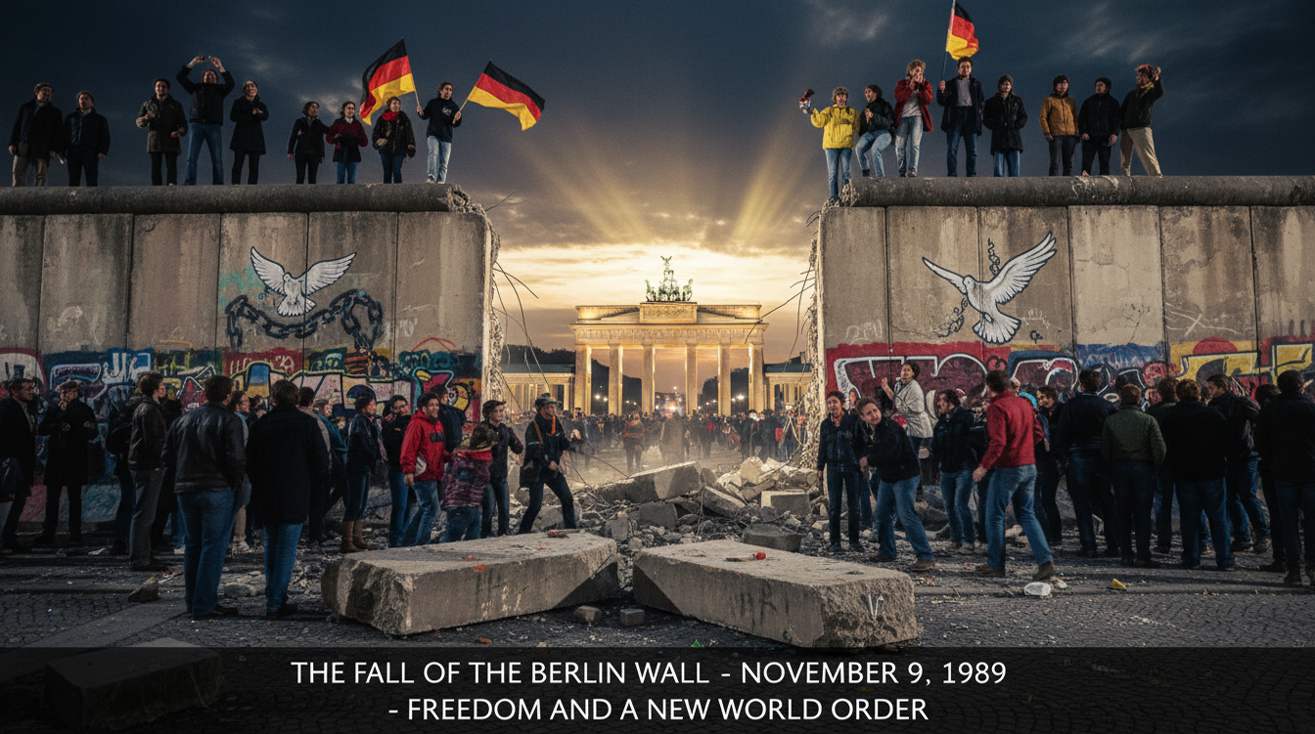
On the night of 9 November 1989, when crowds of Berliners climbed, hammered and danced on the concrete barrier that had divided their city for 28 years, few of them were thinking about international law. They were celebrating freedom, reunions, and the end of a bitter era.
Yet that dramatic evening did more than change everyday lives in Berlin. The fall of the Berlin Wall became a turning point that still shapes how states think about sovereignty, human rights, borders and security today. The Wall’s collapse did not just mark the end of the Cold War; it quietly rewired the legal order behind world politics.
From a divided world to a new legal mindset
To understand why, it helps to remember what the Wall represented. Built in 1961, it physically embodied the split between two competing systems: a Western bloc led by the United States and a Soviet bloc centered on Moscow. Each side had its own alliances, courts, trade rules and political ideology. International law existed, of course, but often through the lens of power rivalry and military deterrence.
When the Wall came down and Germany reunified in 1990, that division began to dissolve. The Cold War security architecture, based on two armed camps facing each other, gave way to a more integrated vision: enlarged regional organisations, stronger European institutions and an expanded role for the United Nations. Lawyers and diplomats suddenly had to deal with questions that the old order had frozen for decades: Can states peacefully reunite? How should borders be confirmed? What happens to citizenship when two legal systems merge into one?
The international community’s response to German reunification – especially the 1990 “Two Plus Four” negotiations between the two German states and the four former occupying powers – became a template for dealing with complex questions of unification, demilitarisation and sovereignty in later cases. The message was clear: change was possible, but it had to respect both international agreements and the rights of people on the ground.
Redefining sovereignty and self-determination
One of the biggest shifts triggered by 1989 was in how we understand state sovereignty and self-determination. During the Cold War, sovereignty was often used as a shield: what happened inside a state’s borders was its own business, even if that involved repression or closed borders.
The peaceful revolutions across Eastern Europe – from Berlin to Prague and Warsaw – reinforced another idea: peoples have a right to decide their own political future. East Germans who crossed the Wall were not just exercising the right to travel; they were expressing a collective demand for democratic self-determination. Germany’s reunification was formally grounded in this principle, framed as the free choice of the German people.
Since then, the balance between sovereignty and people’s rights has quietly shifted. International law still respects territorial integrity, but it is increasingly hard for states to justify sealing off their populations behind borders or walls that violate basic freedoms. In debates about secession, unification or autonomy, lawyers routinely refer back to 1989 as proof that peaceful change is possible when citizens clearly express their will.
Human rights: from propaganda tool to legal obligation
The Berlin Wall also exposed how deeply human rights and international law are linked. For decades, families were separated by barbed wire, people were killed trying to cross, and East German citizens lived under tight surveillance. For Western governments, these abuses were proof that communist regimes violated basic freedoms. For the East, human rights talk was often dismissed as propaganda.
After 1989, that cynicism became much harder to maintain. Former Eastern bloc countries seeking to join European organisations like the Council of Europe or the European Union had to show they were serious about democracy, the rule of law and individual rights. That meant accepting the jurisdiction of bodies such as the European Court of Human Rights and aligning domestic laws with international human rights standards.
In practice, this shift helped transform human rights from a political argument into a legal framework with real consequences. Today, when states build walls or fences, restrict movement, or use surveillance, they face far more scrutiny than during the Cold War. Courts and international bodies now regularly assess whether such measures are proportionate and compatible with rights like freedom of movement and the right to family life.
Borders, walls and the “never again” lesson
Ironically, the world has seen many new walls and fences since the original Wall was torn down. From fortified borders in Europe to barriers in the Middle East and the Americas, physical separation is still a common response to migration, security threats or political tensions.
But the memory of Berlin continues to influence how these structures are debated in law and politics. The Wall is now a symbol of division and repression, not safety. When governments propose new border infrastructure, critics often invoke Berlin as a warning about what happens when walls become permanent and when people are treated as threats instead of rights-holders.
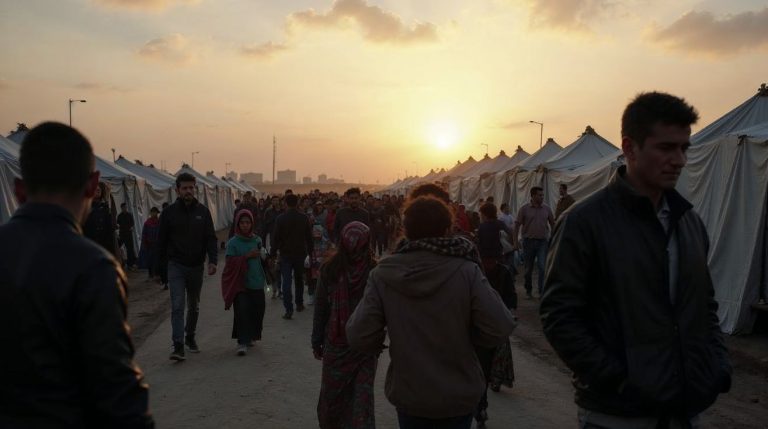
International law has also become more attentive to what happens at borders. Rules on refugee protection, non-refoulement (the principle that people must not be sent back to places where they face serious harm), and the use of force by border guards all reflect lessons drawn from a century marked by closed borders, mass displacement and walls. The story of the Berlin Wall – including its human cost – is part of that wider legal memory.
Transitional justice and dealing with the past
Another lasting impact lies in how societies deal with the legacies of closed regimes. After 1989, Germany faced difficult questions: Should former officials be prosecuted? What about border guards who shot escapees? How should the Stasi archives, filled with personal data, be managed?
The answers helped shape today’s field of transitional justice, which looks at how states emerging from authoritarian rule can confront past abuses while building a stable democracy. Germany’s approach combined trials for serious crimes, public access to secret police files, and efforts to compensate victims. This mix of criminal accountability, truth-telling and reparations has since informed international practice in places from Latin America to Eastern Europe and beyond.
Whenever international lawyers discuss truth commissions, lustration (removing certain officials from power) or reparations for victims, they often draw lessons from the post-Wall German experience. The idea that closing a dark chapter requires both justice and reconciliation is one of the quiet legacies of 1989.
European integration and collective security
The fall of the Wall also accelerated European integration. Former Eastern bloc countries joined the European Union and NATO, accepted common rules, and participated in shared decision-making on trade, migration and security. This expansion helped turn the EU into a powerful legal order that influences everything from digital privacy to environmental standards.
In international law terms, this means that more states operate under dense webs of treaties, court decisions and common policies. Conflicts that once might have led to unilateral action are now more often channelled through legal mechanisms – infringement procedures, international courts, arbitration – rather than sheer power politics.
Of course, tensions still exist, and not all countries see integration in the same way. But the overall direction that started in 1989 remains: problems that cross borders, from migration to energy security, are increasingly handled through shared legal frameworks rather than isolated national laws.
Why it still matters today
More than three decades later, you might wonder: isn’t the Berlin Wall just history? In many ways, yes. The concrete slabs have become memorials, art pieces and tourist attractions. A new generation has grown up without ever seeing the Wall in place.
But the questions that the Wall raised are still with us. How far can states go in protecting their borders? When do security concerns become an excuse to limit fundamental freedoms? What responsibilities do governments have towards people trying to cross, reunite with families, or escape repression?
International law has no simple answers. Yet the story of the Wall offers a powerful reference point. It reminds us that legal rules are not abstract; they are shaped by real experiences of division, courage and change. The fall of the Berlin Wall pushed the world towards an order where human rights, self-determination and cooperation across borders matter more – at least in principle – than rigid blocs and permanent barriers.
Every time a new wall is proposed, a border crisis erupts, or a people demand the right to decide their future, the echoes of 1989 can still be heard. That is why the fall of the Berlin Wall is not just a historical event, but a living chapter in the ongoing evolution of international law.