How colonial borders shaped today’s biggest conflicts
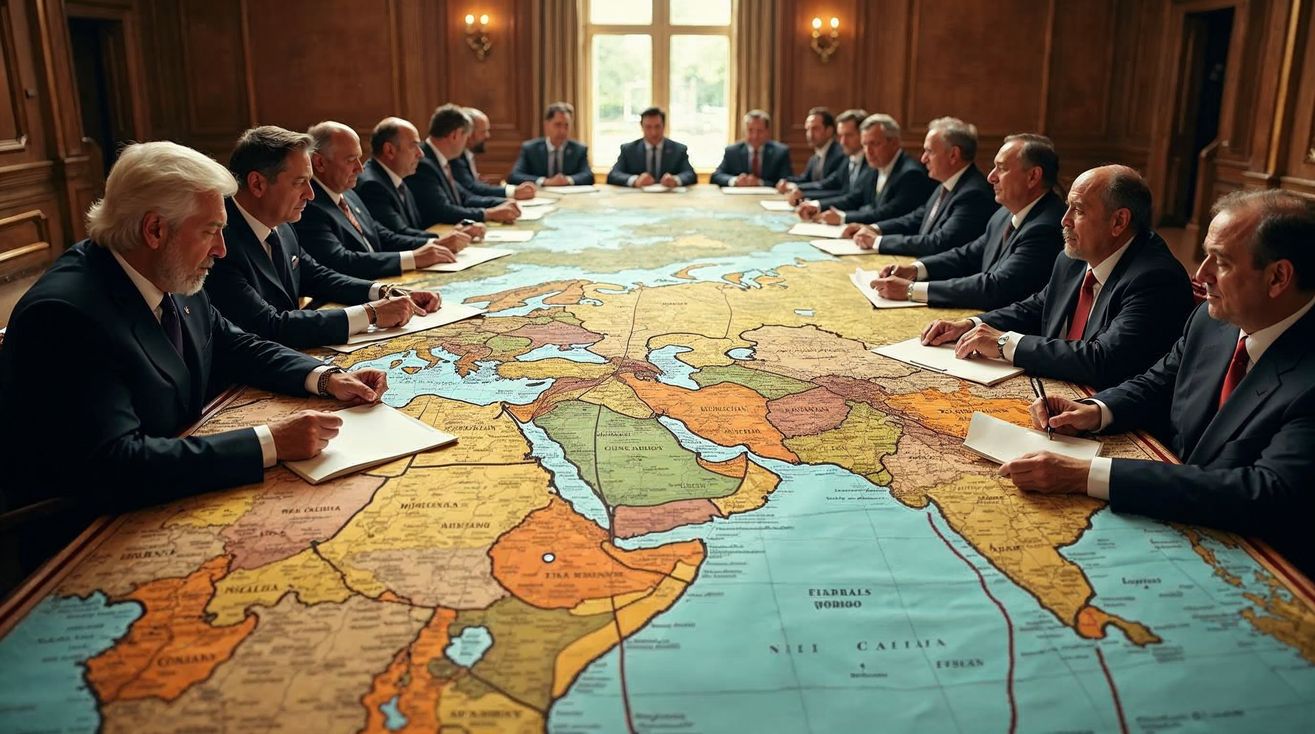
The lines on a map, drawn with a ruler and ink, can seem so abstract, so distant. Yet, these very lines—those colonial borders—have birthed some of the most enduring conflicts in our world today. Imagine a room full of foreign dignitaries, unfamiliar with the lands they were dividing, carving up continents like a pie. It sounds almost absurd, doesn’t it? But that’s precisely what happened.
The Legacy of Arbitrary Lines
The legacy of colonial borders is a tangled web of disputes and tensions. These borders, often drawn without regard for the complex tapestry of ethnicities, languages, and cultures, have left nations grappling with internal divisions and external threats. Take Africa, for instance. During the infamous Berlin Conference of 1884-1885, European powers divided the continent with little understanding of the indigenous peoples or their land. According to a Britannica article, this meeting set the stage for many of today’s African conflicts.
It’s not just Africa. Across the globe, from the Middle East to South Asia, colonially-imposed boundaries have fueled disputes. These borders were often drawn with little consideration for historical territories or current realities. And today, nations continue to pay the price.
Enduring Conflicts and Their Roots
Consider the Middle East, where the Sykes-Picot Agreement of 1916 laid the groundwork for many of the region’s enduring tensions. The agreement, a secret understanding between Britain and France, divided the Ottoman Empire’s Arab provinces into areas of influence. This act of geopolitical chess has left its mark, with ongoing conflicts in Syria and Iraq often tracing back to these imposed boundaries.
South Asia tells a similar tale. The partition of India in 1947, orchestrated by the British, led to the creation of India and Pakistan. This division was not only a result of colonial ambitions but also a catalyst for religious and ethnic strife. The Kashmir conflict, a long-standing source of tension between India and Pakistan, is a direct legacy of the hasty partition and the arbitrary lines drawn on a map.
The Human Cost of Borders
What about the human element? It’s easy to get lost in the politics and history, but at the heart of these conflicts are people—families torn apart, communities divided, lives forever changed. In Africa, for example, ethnic groups like the Hutu and Tutsi in Rwanda found themselves on different sides of a border, leading to unimaginable violence. The psychological scars of such divisions can last generations, creating a cycle of mistrust and resentment.
And then there’s the economic impact. Borders can hinder trade, disrupt local economies, and exacerbate poverty. The arbitrary nature of these lines often means that natural resources are unevenly distributed, leading to economic disparities that fuel further conflict.
Searching for Solutions
Is there a way forward? Addressing the legacy of colonial borders requires more than just political maneuvering; it demands a deep understanding of the cultural and historical contexts of each region. Efforts must be made to bridge cultural divides and foster dialogue between communities. In some cases, regional cooperation and integration can help ease tensions, allowing nations to work together to address shared challenges.
Education plays a crucial role as well. By teaching younger generations about the history and complexity of these borders, we can foster empathy and understanding. As noted by the United Nations, promoting peace education is vital for building a more harmonious future.
Ultimately, the road to peace is long and fraught with challenges. But by acknowledging the past and working towards a more inclusive and equitable future, we can begin to heal the wounds inflicted by these colonial borders.
In the end, it’s about more than just lines on a map. It’s about people—people who deserve to live in a world where borders do not dictate their fate. So, let’s start the conversation. What can we do today to ensure a better tomorrow? Join the dialogue, share your thoughts, and be part of the solution.