If you grew up in the 1960s or 70s, here are 9 powerful life lessons you rarely hear about today
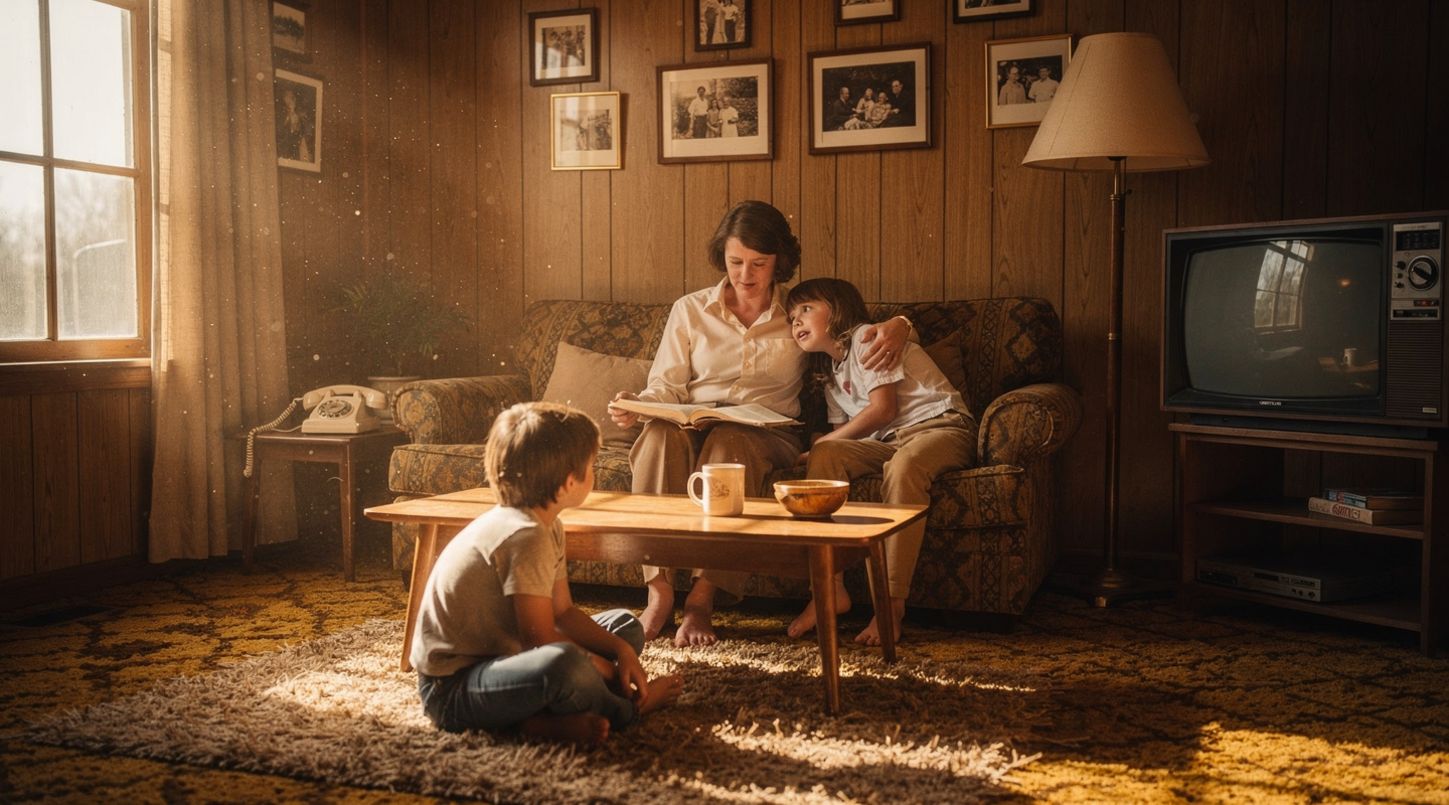
I’ve been thinking a lot lately about the way my parents raised me—the lessons they didn’t even realize they were teaching. They grew up in a different era, you see, and certain values just seemed to be baked into their worldview in a way that feels almost foreign to me now.
There’s something about that period—the 60s and 70s—that shaped people differently. Not better, necessarily. But differently. These weren’t people obsessed with optimization or personal branding. They just… lived. And in that living, they picked up some genuinely useful wisdom that I think we’ve lost somewhere between the internet boom and the constant pressure to be “on.”
I’m not romanticizing the past here. But I’ve noticed that people from that generation often have a kind of groundedness that’s increasingly rare. And when I look at what made them that way, it’s actually pretty revealing.
Here’s what I’ve found.
1. You Can Entertain Yourself Without a Screen
My dad used to sit on the porch for hours with nothing but a book and his own thoughts. I remember thinking it was boring. Now I realize he was onto something.
People raised in the 60s and 70s didn’t have the luxury of constant entertainment delivered through a glowing rectangle. So they learned to sit with themselves. They learned to be bored, and they discovered that boredom wasn’t actually a crisis—it was just a quiet space where your mind could wander.
Psychologists have found that what we call unstructured downtime is actually critical for creativity and mental health. When your brain isn’t being stimulated, it does something remarkable. It starts making connections. It processes. It dreams.
I’ve seen this with my own kids. When they’re forced to sit without screens, they initially lose their minds. But after about twenty minutes, something shifts. They start drawing. They start building things. They start using their imaginations in ways that feel almost foreign.
If you find yourself unable to sit alone with your thoughts for even five minutes, you’re not weak. You’ve just been conditioned differently.
2. Doing Chores Actually Teaches Self-Respect
Growing up, you did chores. Not as punishment, but as part of living in a household. You washed dishes. You took out trash. You mowed the lawn.
I used to resent this. Now I see it for what it was: a quiet lesson in responsibility and dignity.
There’s research suggesting that kids who have regular chores develop stronger internal locus of control—meaning they feel more capable and in charge of their lives. It sounds simple, but it’s profound. You learn that your effort directly impacts your environment. You matter.
My neighbor’s teenager recently realized he could make money doing yard work for elderly people on his street. Nobody taught him this explicitly. But because he’d been doing chores his whole life, it felt natural to him. He understood the value of work. He wasn’t afraid of it.
When we shield kids from chores, we accidentally teach them that they’re not capable. That they’re too delicate for real work.
3. Boredom Forces You to Be Creative
There were exactly three television channels when my parents were young. One of them signed off at 11 PM.
So what did people do? They made things. They played instruments. They read. They started bands in garages and made up games in backyards.
Constraint breeds creativity, and that’s not just something I’m saying—it’s what neuroscientists have actually documented. When your options are limited, your brain works harder.
I’ve noticed this in myself during the rare times I step away from endless content options. I get antsy at first, then something clicks. Suddenly I’m writing, cooking, reorganizing, doing things I’d genuinely forgotten I enjoyed.
The irony is that we have unlimited entertainment options, yet people report being more bored than ever. We’re overstimulated but underwhelmed.
Related: How to reclaim boredom and rediscover what actually interests you
4. People Are More Interesting When They’re Not Curated
In the 60s and 70s, you couldn’t craft a perfect version of yourself to present to the world. You just… were.
You wore what you wore. You liked what you liked. Sure, there were social pressures, but the particular madness of crafting a consistent personal brand across multiple platforms didn’t exist.
People from that era tend to be refreshingly genuine. They say what they think. They have quirks that don’t fit neatly into a marketable narrative, and they seem okay with that.
Psychologists studying authentic self-presentation have found that when people can’t constantly perform for an audience, they actually become more comfortable with their real selves. Paradoxically, this makes them more magnetic, not less.
I’ve noticed I’m more drawn to older people partly because they feel more real. They’re not constantly monitoring how they’re being perceived.
5. Saying “No” Didn’t Require an Explanation
My grandmother could decline an invitation with one sentence. She didn’t owe anyone a detailed justification for her choices.
These days, we seem to believe that saying no requires an elaborate excuse. We feel guilty for having boundaries. We over-explain because we’re afraid of being misunderstood or seeming rude.
People raised in the 60s and 70s had something we’ve lost: permission to simply have preferences without justifying them to everyone.
They also seemed to have internalized that other people’s feelings weren’t actually their responsibility to manage. If someone got upset because they said no, well, that was that person’s journey, not theirs.
I’m slowly trying to reclaim this. A simple “I can’t, but thank you for asking” is actually complete.
6. You Could Fail Without It Being Permanent
There was no record. No algorithm remembering your mistakes. No searchable digital footprint of every embarrassing thing you did.
So people took risks. They tried things. They failed. And then they moved on.
Your failure at the school talent show wasn’t captured and immortalized on social media. Your awkward phase didn’t live forever on the internet. You got to actually grow and change and become someone new without dragging your entire history with you.
“Resilience isn’t built in perfectly safe environments. It’s built in spaces where you can actually fail and recover.” – Psychologist Dr. Angela Duckworth, author of Grit
This might be the most profound difference. People from that generation know something about resilience that we’re actively teaching our children not to know: that mistakes aren’t permanent.
I’ve caught myself treating minor social missteps like they’re career-ending disasters. Then I remember that my parents survived actual disasters without the luxury of obsessing over them.
7. Community Wasn’t Optional—It Was Just What Happened
Your parents knew your neighbor’s kids. You played baseball with them. You borrowed things. You helped when someone was moving. There wasn’t a choice to make about being part of a community. You just were.
People raised in that era have social skills that feel almost supernatural to me now. They can talk to anyone. They know how to make conversation. They don’t assume someone is creepy for saying hello.
Research on social cohesion shows that communities where people actually interact with their neighbors have lower rates of depression and loneliness. But it’s not just statistical—it’s felt. There’s a security in knowing you’re embedded in something larger than yourself.
My grandmother still knew every person on her street by name. Knew their kids. Knew their stories. And she seemed to carry a kind of lightness because of it—like she belonged somewhere.
8. You Learned Patience From Actually Waiting
Everything took longer. If you wanted to talk to someone, you called their house and hoped they were home. If you wanted to know something, you looked it up in a library or waited to hear about it.
This enforced waiting actually taught people something valuable: patience and delayed gratification.
Research has consistently shown that kids who can delay gratification tend to do better in school, have better relationships, and report higher life satisfaction as adults. Waiting teaches you that good things take time. That anticipation has its own richness.
I’ve noticed that my generation, accustomed to instant answers, gets irrationally frustrated when things take more than five minutes. The 60s and 70s generation? They’re comfortable with waiting. They don’t experience it as deprivation.
9. Stories Mattered More Than Facts
Before we had the internet to fact-check everything, people told stories. And those stories were how knowledge actually got passed down.
Your grandfather didn’t deliver you a TED talk about work ethic. He told you about the time he failed at something and what he learned. Your grandmother didn’t lecture you about self-care. She modeled it quietly by taking time for herself without guilt.
The narrative brain is different from the fact-absorbing brain. Stories change us in ways that lists of facts never do. We remember the narrative. We internalize the lesson without even realizing it.
I learned more from my dad’s stories about his mistakes than I ever learned from any advice he explicitly gave me.
What this all means
I don’t think we need to move back to the 60s and 70s. But I think we could borrow some of the values without throwing away our smartphones.
The real lesson from that generation isn’t about the past. It’s about what happens when you’re not constantly monitored, constantly stimulated, constantly judged. People develop groundedness. They become more genuinely themselves. They take risks. They build real communities.
Maybe the question isn’t “How do I live like people in the 60s and 70s?” but rather “What could I reclaim about the way they lived that would make me feel more settled in my own life?”